NovaSpira Biotherapeutics
First-in-Class T‑Cell & Immune Cell Activator

NovaSpira Biotherapeutics is a U.S.-based biotech company developing bispecific T-cell & immune cell activator therapy for GPC3-positive solid tumors, including liver & lung cancers. The lead candidate, NS‑342, is currently in Phase 1 clinical development.
About Us

Han Li
Co-Founder and Chief Executive Officer
Han's 28-year experience spans finance, strategy, and science across leading organizations. He served as CFO at Ascentage Pharma, held business development and strategy roles at Bayer, and conducted research at Genentech. Earlier in his career, he worked as a biotechnology analyst at Morgan Stanley and SunTrust
Han Li, Ph.D., MBA
Han Li, PhD, MBA
Co-Founder and CEO
Jason Huang
Co-Founder
Jason has extensive experience in oncology clinical development, with a focus on the design, execution, and oversight of clinical trials across multiple stages of development. He previously served as Chief Medical Officer at XlifeSciences and Fosun. His background includes leading oncology clinical development efforts at Ascentage Pharma, GSK, Bristol Myers Squibb, and Novartis, with experience spanning global clinical programs and translational strategy.

Jason Huang, MD
Co-Founder
Han Li
Min Ding
Co-Founder
Min has more than 25 years of experience in business and intellectual property law. His career spans roles at law firms and within the healthcare industry. He holds a J.D. from Columbia Law School.

Min Ding, PhD, JD
Co-Founder
Board of Directors

Lars Birgerson
Board of Directors
Lars E. Birgerson is a physician-scientist and business leader with more than 35 years of experience in the pharmaceutical industry. He serves as President of The Birgerson Group and is a Director and Chief Medical Officer at Adlai Nortye. Earlier in his career, he held senior executive roles at major pharmaceutical companies including Roche, Bristol Myers Squibb, and Pfizer. His background combines clinical expertise with strategic leadership in drug development and global biopharma operations.
Lars E. Birgerson, MD, PhD
Lars E. Birgerson, MD, PhD
Board of Directors
Board of Directors

Tom Tang
Board of Directors
Kaiyang (Tom) Tang is an executive with a dual background in medicine and business administration. He is the CEO of PHA Capital Alliance and also serves as President of Adlai Nortye. Previously, he held senior leadership positions at Generon, Hutchison MediPharma, and Pfizer, where he worked across pharmaceutical development and corporate strategy. His career spans both clinical and commercial roles within the global biotech sector.
Tom Tang, MD, MBA
Tom Tang, MD, MBA
Board of Directors

Our Investors


NS-342, a First-in-Class GPC3x4-1BB Bispecific T-cell &Immune cell Activator
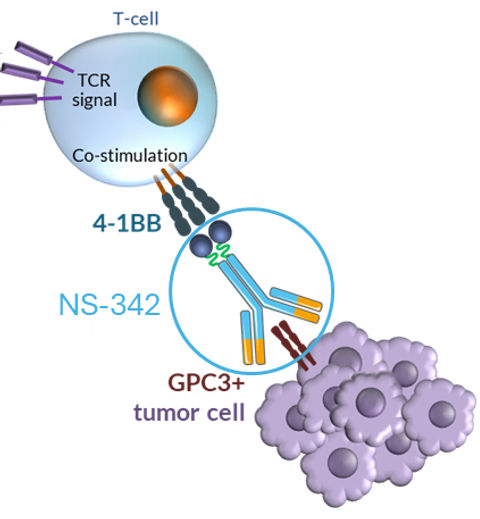
NS-342 (Formerly known as PRS-342 or BOS-342) is a fully human bispecific T-cell & immune cell activator generated using anticalin fusion protein technology. It binds to and activates the co-stimulatory immune cell receptor 4-1BB (CD137) when also binding to the tumor cell antigen GPC3.

Anticalin Technology


-
Glypican 3 (GPC3) is a tumor-associated antigen that is specifically expressed in many cancers, including liver, squamous lung, and gastric cancers.
-
4-1BB (CD137) is an inducible co-stimulatory receptor expressed on activated immune T cells, NK, dendritic cells, monocytes, and neutrophils.
-
4-1BB-targeting TCE delivers prolonged, enduring anti-tumor immune responses, ideal for long-term tumor control.
Preclinical Data Summary
-
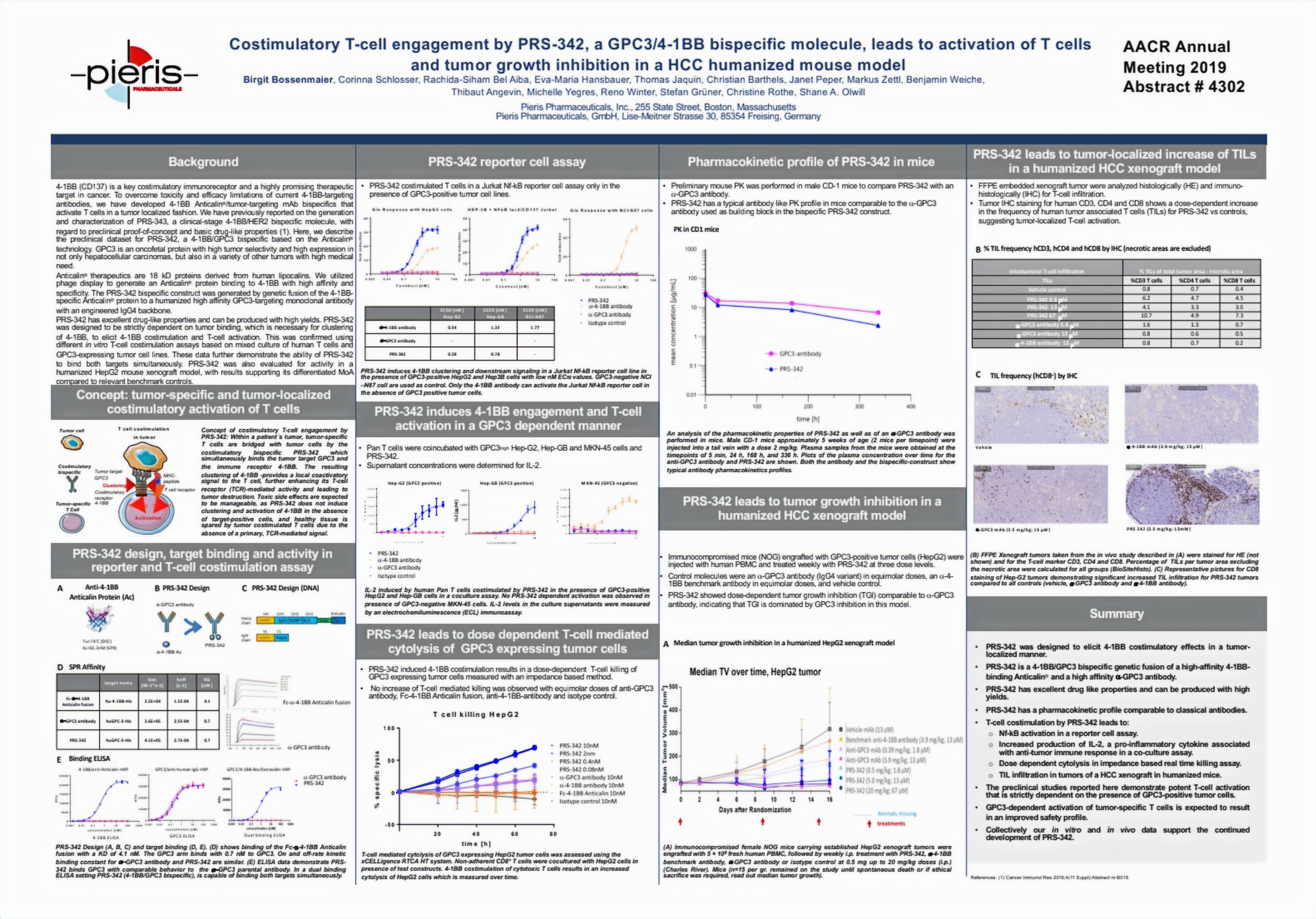
In vitro binding assays
-
NS-342 binds 4-1BB and GPC3 with high affinity and specificity
-
NS-342 binds to 4-1BB and GPC3 simultaneously
-
-
In vitro functional assays
-
NS-342 induces potent dose-dependent T-cell activation and tumor cell killing only in the presence of GPC3 expression
-
- NS-342 is efficacious in vivo
-
NS-342 inhibits turior growth in an HCC humanized mouse model
-
NS-342 leads to dose-dependent increases in CD3+ and CD8+ T-cell tumor infiltration
-
-
Tumor-selective 4-1BB agonism of NS-342 allows maximum local activation of 4-1BB for tumor cell killing with minimal risk of side effects
Clinical Development
-
Early Phase I data advanced liver cancer show:
-
a favorable safety profile
-
robust immune activation corresponding with biochemical response
-
evidence of anti-tumor efficacy (durable response observed)
-
-
Plan to initiate Phase Ib/PoC study in GPC3+ solid tumors